





Key Highlights:
- Binance CSO Jimmy Su exposes North Korean hackers as the biggest threat in 2025.
- North Korean hackers poison open-source code.
- As of now $2.17 B stolen in first half of 2025.
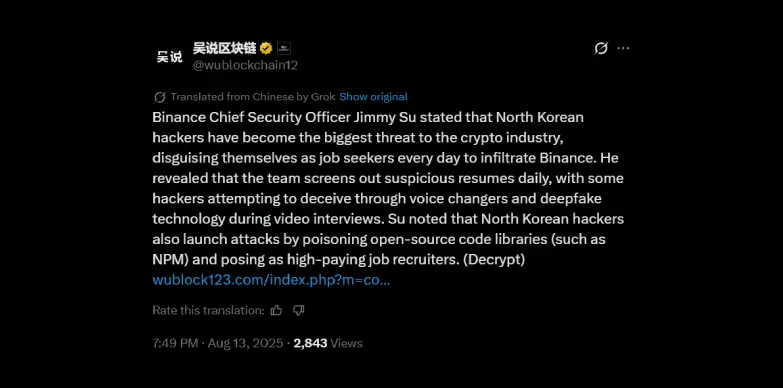
North Korean hackers are the biggest and boldest threat to crypto in 2025, pulling off slick scams to infiltrate companies and snatch billions in digital assets. Binance’s Chief Security Officer, Jimmy Su, revealed that these operatives pose as job seekers, even using voice changers and deepfakes in interviews, raising the security stakes for crypto firms around the globe.
Fake Job Applications Emerging as a Major Security Threat
North Korean hackers are going far beyond typical cyberattacks. They create fake crypto consulting firms and run bogus job interviews, luring candidates and employees into downloading malware disguised as coding tests or assignments. This social engineering tactic lets them plant malicious payloads, from JavaScript stealers to Python backdoors, giving them access to company systems and sensitive data. These tools can swipe information available on the system, steal browser data, open reverse shells, and install remote access software, making the attacks deeply invasive and highly dangerous.
The scale of infiltration is increasing day by day. Security experts and crypto investigators have found hundreds (probably close to a thousand) North Korean IT operatives secretly working in the crypto industry through remote IT roles. They also usually refer contacts from their own networks, which builds deep footholds inside target companies.
Many of these bad actors show red flags such as inconsistent IP addresses, failing KYC checks, or frequently changing identifiers on platforms like GitHub. With the help of insider access, they can easily manipulate projects, commit fraud, and launch hacking operations quietly from within.
North Korean State Hackers Linked to Major Bybit Breach
In 2025, there have been n number of heists and most of these were traced back to North Korea’s elite hacking crews. The biggest hit came in February, when Dubai-based exchange Bybit was breached, losing about $1.5 billion in Ethereum tokens. This single attack stands as the largest crypto theft in history and makes up nearly 69% of all stolen funds this year. The FBI and blockchain investigators have firmly linked the breach to state-sponsored hackers from North Korea, underlining their extreme skill and persistence.
Overall, more than $2.17 billion has been looted from the crypto world in the first half of 2025, already beating all of 2024’s losses and setting a new six-month record. Analysts warn thefts could hit $4 billion by year’s end if this pace holds. North Korea was behind nearly two-thirds of all crypto hacks in 2024, and its crews have only stepped up in 2025 fuelling their operations by dodging global sanctions through large-scale crypto theft and laundering.
Alongside direct hacks, North Korean cyber crews pull off supply chain poisoning by slipping malicious code into popular open-source repositories like NPM (Node Package Manager). They also pose as high-paying recruiters or job agencies to bait victims while planting malware for long-term access. Adding to the mix, they use voice-changing tools and AI-made deepfakes in job interviews, showcasing just how creative and tech-savvy they have become in social engineering.
Experts Urge Stronger Recruitment and Vetting Practices
Experts warn that the crypto world and the wider tech space, must step up hiring vigilance, especially for remote roles. Tight identity checks and thorough background screening are key to stopping infiltration. Companies are also urged to bolster defences with multifactor authentication, frequent security audits, solid employee training on phishing and social engineering, and monitoring systems to flag unusual behaviour that could signal insider threats.
The impact, however, reaches far beyond crypto. North Korea is also going after aerospace, defence contractors, and other high-value sectors. Still, the big payouts and weaker security in crypto make it their favourite hunting ground. Fighting back demands global teamwork, law enforcement, cybersecurity experts, and governments working in sync to track stolen funds, take down hacker networks, and shut down these complex operations before they hit their mark.
Also Read: Upexi Appoints Arthur Hayes to Lead Solana Advisory Push
