




Key Highlights:
- Real-World Assets (RWAs) increase accessibility for investors.
- RWAs act as a bridge between traditional finance and the blockchain industry.
- Adoption of RWAs may increase in the coming years as per well-known industry leaders.
The blockchain industry is one of the fastest-evolving industries that there is. This sector changes the way people invest and access value. Before blockchain took over, investing in certain assets was limited to big institutional players only but with the growth of the blockchain industry, these assets have opened their doors for everybody on the internet.
According to various data, activity in this space is topping $22 billion, and the growth of this number is imminent as the regulations within the crypto industry become more clearer with the CLARITY Act.
The majority of this shift has been possible because of real-world assets (RWA), a new class of tokenized assets where old financial world meets the new one. This industry is basically providing a huge opportunity to connect with and benefit from a more open, liquid financial ecosystem.
What are Real-World Assets?
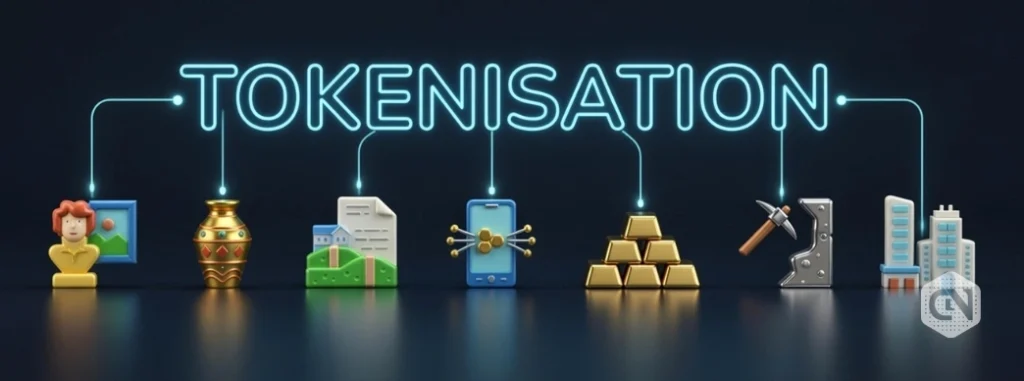
Real-World Assets are tokenized forms of traditional assets that are reflected digitally on the blockchain. Once tokenized, these RWAs have ownership rights or share of the asset.
In this way, anyone with an internet connection can buy, sell or trade pieces of real-world value just like they would trade a cryptocurrency, but with the security and traceability that blockchain provides.
As these assets are tokenized and reflected on the blockchain, the number of investors that can access these assets increases. Through this process, investors can buy high-value assets in fractions.
Moreover, as their entire transaction takes place on the blockchain, when compared to traditional assets, these blockchain’s assets make transactions faster, secure, and can be publicly viewed by anybody.
Historical Roots Before and After Blockchain
Even before the blockchain industry took over, versions of tokenization did exist. Financial products such as REITs, ETFs and mortgage backed securities and it allowed people to invest in assets without owning them directly. But the catch here was that the systems were centralized, expensive and nothing was transparent. Moreover for any transaction to complete it would take days as it was dependent on the intermediaries.
However, things changed in 2009 when Bitcoin proved that even digital assets can be scarce, secure and could also be transferred without needing a central authority. In the early 2010s, projects like Mastercoin and Colored Coins experimented with representing real-world assets on blockchains.
The first widely adopted example of asset tokenization came in 2014 when USDT (Tether) was launched. USDT is a digital token that is backed by fiat currency reserves. This token was the one that proved that real-world assets can be represented on a blockchain and used at a huge or global scale, especially for payments and trading. However, early RWA tokens were limited in functionality and relied on basic transfer logic.
The real change came in with the launch of Ethereum in 2015. Ethereum launched smart contracts which allowed real-world assets to be programmable rather than static. So this was something that helped make it automate ownership rules, compliance checks, revenue distribution and settlement, all essential for scaling RWAs.
Due to this, RWA then managed to expand into areas such as real estate, bonds, credit, commodities, and private markets, laying the foundation for today’s RWA sector.
However, the real RWA boom began in 2023, when institutions made an entry into the space. Additionally, after the 2022 bear market, investors wanted something that was stable and would generate yield and not hype. Tokenized bonds and credit fit here perfectly. Clearer rules around the custody, compliance and on-chain settlement also gave the institutions a confidence to move real capital on-chain.
Key Sectors Driving Real-World Asset Tokenization
In today’s time, investors are inclined to RWAs because the accessibility to high-value assets increases and hence the adoption of RWAs has increased. It has also had a strong backing from industry leaders such as Brian Armstrong and multiple industries are now actively moving assets on-chain. A few of them have been listed as below:
Real Estate: In this RWA sector, properties are tokenized and then they are split into smaller units. In this way, investors can have an exposure to high-value assets by owning a fraction of the asset.
This has become so common that the Trump Organization is tokenizing its Trump International Hotel Maldives project which will allow investors to buy blockchain-based digital shares in the resort’s development.
Government Bond and Treasuries: Tokenized US Treasuries and bonds have seen strong adoption as investors look for on-chain yield with lower risk.
Stablecoins: Here stablecoins such as USDT or USDC are backed by real-world fiat money. This is one of the most mature one within the sector and this RWA has been adopted on a great scale. It is being projected by JP Morgan that the market of these RWAs may hit 500-$750 billion in the coming years.
Private credit and Debt: Loans, invoices and private credit are also being tokenized so that capital can be unlocked faster. This sector gets the benefit from repayments, transparency and global investor access.
Commodities: Assets such as gold and other precious metals are being tokenized so that these assets become easy to trade, investors can have the benefit of fractional ownership and there are on-chain settlement.
Funds and Securities: Investment funds, ETFs and structured products are moving on-chain so that the settlement time needed for a transaction is reduced.
Intellectual Property and Collectibles: Patents, royalties, fine arts and luxury collectibles are emerging RWA. These use cases allow creators and owners to monetize their work.
Future Outlook
In 2026, real-world asset tokenization is expected to grow as the use cases will increase and so will the adoption. Emerging use cases may also include equities, supply chain assets, and green energy projects. The technology will expand more into corporate paper, trade receivables and short-term corporate debt which will further bring liquidity and faster settlement to previously hard-to-hard trade financial instruments.
Also Read: RWA vs DeFi; Here’s a Look at Which Will Yield More in 2026

 GoogleNews