




Key Highlights:
- Feng Bo publicly backed Haseeb Qureshi, calling him the leader behind one of the firm’s strongest partner teams.
- Former partners, including Alexander Pack and Ivan Bogatty, shared differing accounts of Dragonfly’s early formation and credit for its growth.
- The dispute comes after Dragonfly’s $650 million fundraise, raising questions about track record attribution and leadership narratives in crypto venture capital.
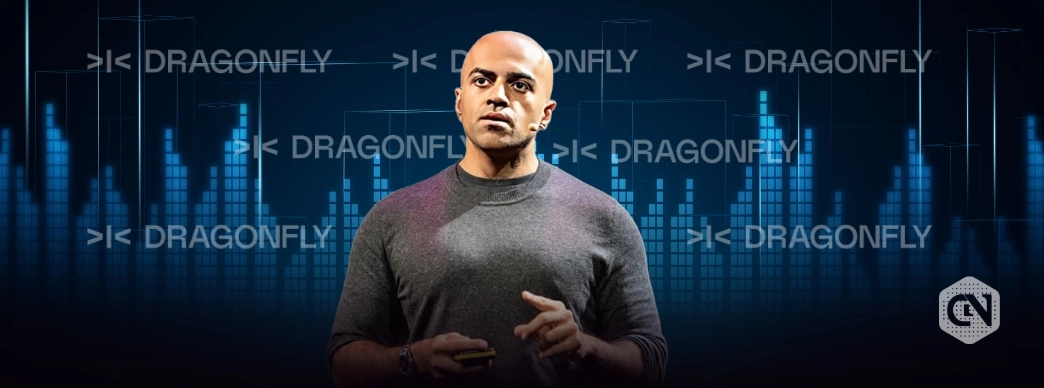
A public dispute over credit and early history at Dragonfly Capital has been going on for a while now, and things have taken a turn after founder Feng Bo openly voiced support for managing partner Haseeb Qureshi. The exchange comes days after the firm closed a $650 million fund and renewed speculation over its origins and leadership.
Feng Bo took to social media to defend Qureshi’s role in shaping the firm. He said that when Dragonfly first began, it operated as a fund of funds. Through that work, he said he met many investors, but Qureshi stood out as the most talented. Bo said he invited him to help build a venture-focused business from that base.
He described the firm’s development as a gradual process across several market cycles. Dragonfly, he said, evolved into one of the first international venture firms dedicated fully to the crypto sector. Within the partnership, Bo said each partner had distinct strengths across CeFi, DeFi, fintech, and consumer investing, while Qureshi acted as the team’s central leader.
Bo added, “I’ve been a VC for a long time. And Haseeb has built one of the best partnerships that I’ve experienced in my 30 years as a VC.” He said the collaboration has been a defining professional experience and that he expects the partnership to continue for years.
Dragonfly’s Leadership Credit Controversy Continues
The statement followed a separate post from former Dragonfly research partner Ivan Bogatty, who offered his own account of the firm’s early years. Bogatty said Qureshi played a critical role in shifting Dragonfly from a fund-of-funds structure into a pure venture capital firm that led deals directly. He also said Qureshi helped bring in prominent industry connections and recruited senior investors who later became general partners.
Bogatty argued that both Qureshi and co-founder Alexander Pack contributed to building the firm, though he said Qureshi’s operational leadership was central to its growth. He added that Pack’s concerns about being left out of the firm’s history were understandable, given his role in early fundraising and investments.
Well said Ivan.
I don’t really tweet, but I wanted to set the record straight.
I started Dragonfly originally as a fund of funds, and through that practice I met a lot of really talented VCs. And through all of that, Haseeb was absolutely the brightest star, so I invited…
— Feng Bo (@FengBo22588938) February 27, 2026
The disagreement traces back to a public exchange between Qureshi and Pack over how Dragonfly’s history should be presented. Qureshi had published a detailed post describing the building of a venture firm in crypto. Pack responded by saying he and Bo had founded Dragonfly earlier and had already completed several deals before Qureshi joined.
Pack pointed to early investments in companies like Bybit, Amber Group, and Crusoe as proof that Dragonfly was active before Qureshi’s arrival. He said both he and Qureshi later held equal roles as managing partners during the firm’s nascent stage.
The debate came up in public at a time when Dragonfly’s latest fundraise has increased its visibility. The company now manages several billion dollars in assets and operates in a competitive crypto venture landscape that has seen a reduction in active US-based funds in recent years.
Industry observers note that disputes over credit and founding narratives are not unusual in venture capital, especially when firms grow and raise larger funds. Track record attribution, however, carries weight with limited partners who evaluate performance history before committing capital.
In the crypto venture sector,as competition intensifies, the narrative around who built a firm and how it turned out tends to influence investor confidence as much as portfolio returns.

