MetaMask Wallet Review 2026


MetaMask is a widely used cryptocurrency wallet developed by Consensys in 2016 to simplify access to decentralized applications (dApps), decentralized exchanges (DEXs), and DeFi platforms. It acts as a bridge between users and blockchain networks, enabling the storage, transfer, and interaction of digital assets. Over time, it has evolved from a browser extension into a full-featured mobile application and a multi-chain wallet, becoming one of the most widely adopted tools in the Web3 ecosystem.
Since it’s a hot wallet, it’s best if you use it to store your funds for regular use. But even then, the world of cryptocurrency is filled with security risks. Through our review, we’ve tried to explore the various tokens that the wallet supports and look into how safe MetaMask is, as a hot cryptocurrency wallet.
MetaMask Wallet Summary
| Wallet name | MetaMask |
| Type | Hot Wallet |
| Coins Supported | 50+ |
| Cold Storage | Yes, via Trezor & Ledger integration |
| Linked Exchange | Yes |
| Languages Supported | 6 |
| Charges | Gas fees + ~0.875% swap service fee |
| Mobile Application | Yes |
| Customer Support | Help Center, Community, Ticket-based Support |
| Cloud Storage | No |
What is MetaMask Wallet?
MetaMask is a self-custodial, multi-chain cryptocurrency wallet that enables users to store, manage, and interact with digital assets across multiple blockchain networks. It allows direct interaction with decentralized applications without relying on centralized intermediaries.
MetaMask was originally launched as a browser extension for Chrome, Firefox, and Brave. Over the years, it grew in popularity and expanded to mobile platforms, seamlessly connecting Web3 services across all platforms on which it’s available. It helps users store and move their funds by creating communications between user wallets and blockchain applications.
Which Coins and Networks Does MetaMask Support?
When MetaMask initially started out, it just supported Ethereum and the tokens on the Ethereum network. However, that has changed and the platform has now evolved into a multichain wallet which supports a wide variety of tokens and networks.
Supported Assets
- Ethereum (ETH) and ERC-20 tokens
- Bitcoin (BTC)
- Solana (SOL)
- Tokens across supported Layer 2 and EVM-compatible networks
- NFTs across supported ecosystems
Supported Networks
MetaMask supports multiple blockchain networks, including:
- Ethereum
- Bitcoin
- Solana
- Polygon
- BNB Chain
- Arbitrum
- Optimism
- Avalanche
- zkSync Era
- Base
- Linea
- Other custom networks via RPC configuration
During our MetaMask review, we found that users can switch between networks within the wallet, enabling interaction across multiple blockchain ecosystems from a single interface.
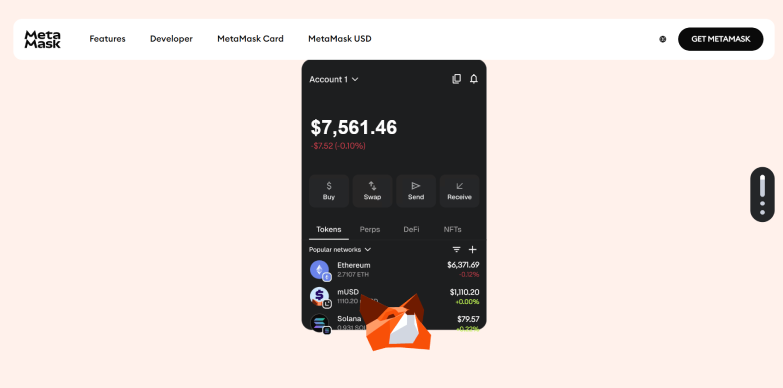
What Are the Key Features Of the MetaMask Wallet?
Buy, Sell, and Swap Crypto
MetaMask allows users to swap tokens directly within the wallet. The swap feature aggregates pricing data from multiple decentralized exchanges (DEXs), automated market makers (AMMs), and aggregators to provide optimal rates.
This eliminates reliance on centralized exchanges and reduces transaction friction. While the wallet itself is globally available, the DEX and aggregators it gathers its pricing data from, may vary across regions depending on local regulations.
In-Wallet Staking
MetaMask enables users to participate in staking through supported dApps and blockchain protocols, allowing them to earn rewards on their holdings within the broader ecosystem. Although this is a good way to earn money out of tokens that sit idle in an account, users need to unstake those tokens before they can sell them. The process of unstaking, however, can be a bit time-consuming.
DeFi and dApp Access
MetaMask acts as a gateway to decentralized applications, enabling users to interact with DeFi platforms, NFT marketplaces, blockchain-based games, and other Web3 services directly from the wallet.
NFT Management
MetaMask supports the storage and management of NFTs across supported networks, allowing users to view and interact with their digital collectibles within the wallet interface.
How Does MetaMask Wallet Work?
MetaMask functions as a bridge between the user and blockchain networks, creating a secure interaction with decentralized applications through browser extensions and mobile apps.
At its core, the platform injects a Web3 JavaScript object into web pages, which allows decentralized applications to communicate with the wallet and request actions such as transaction approvals or account access.
When a user interacts with a dApp, the process follows a structured flow: the dApp sends a request, MetaMask prompts the user for approval, and once confirmed, the transaction is signed locally and broadcast to the blockchain. To ensure that the entire process is secure, private keys are never exposed during this process.
Since MetaMask supports multiple networks, users can switch between them without any effort at all. This improves interactions across different ecosystems without the need of managing too many wallets. For additional security, all credentials and private keys are stored on the user’s device locally. This gives the user more control over their assets under a non-custodial model, and reduces the possibility of a breach, unless the users’ local system takes a hit.
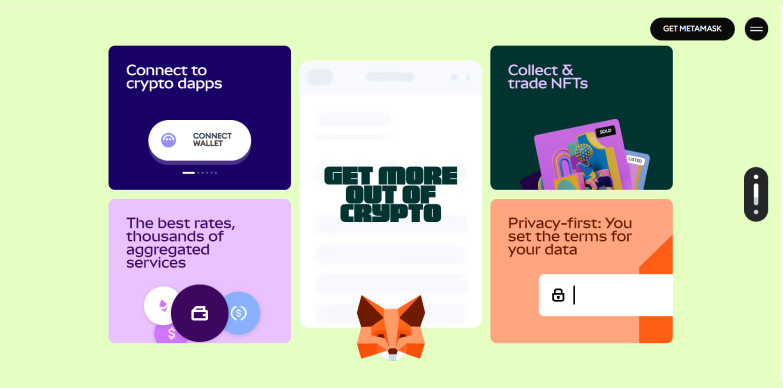
How to Set Up and Use MetaMask Wallet
Here’s what you need to do to use the MetaMask wallet:
- Install the browser extension or mobile app from the official website
- Create a new wallet or import an existing wallet using a Secret Recovery Phrase
- Set a strong password
Securely store the recovery phrase offline - Add funds by purchasing or transferring crypto assets
- Connect the wallet to decentralized applications
Users can access the same wallet across multiple devices by importing it using the Secret Recovery Phrase or supported account login methods.
MetaMask Wallet Pros & Cons
Pros
- Open-source and widely trusted
- User-friendly interface
- Multi-chain support
- Integration with hardware wallets
- Full control over private keys
- Built-in swap functionality
Cons
- Hot wallet (connected to the internet)
- Exposure to phishing and social engineering risks
- Not fully anonymous
- Requires user responsibility for security
What Are the Different Fees on the MetaMask Wallet?
You do not need to pay additional charges to store your crypto funds on the MetaMask wallet. However, standard network fees still apply whenever you’re moving funds to and from your wallet.
Gas Fees (Network Fees)
Transactions require gas fees paid to validators. Although the fees were a bit higher earlier, the introduction of EIP-1559 has reduced the overall gas fees that users need to pay. These fees are now structured into:
- Base Fee: Automatically determined by the network and burned
- Priority Fee (Tip): Optional fee to prioritize transactions
While users don’t necessarily need to pay the priority fee, it’s something that comes in handy if they want to execute their transactions quicker.
For users swapping their coins inside the wallet, they need to pay 0.85% swap fees in addition to the network fees.
Adjustable Gas Controls
A unique feature about the MetaMask wallet is the ability to control the gas fees. Users can adjust transaction fees based on urgency of their transactions:
- Lower fees → slower confirmation
- Higher fees → faster processing
Think of it this way: the network is a tram car with 40 seats, but 400 people want to board it. Since everyone is rushing, the driver prioritizes the ones who pay the highest first. This is done to prevent individuals from clogging the network with multiple low volume transactions. Additionally, the higher the traffic on the network, the higher the fees.
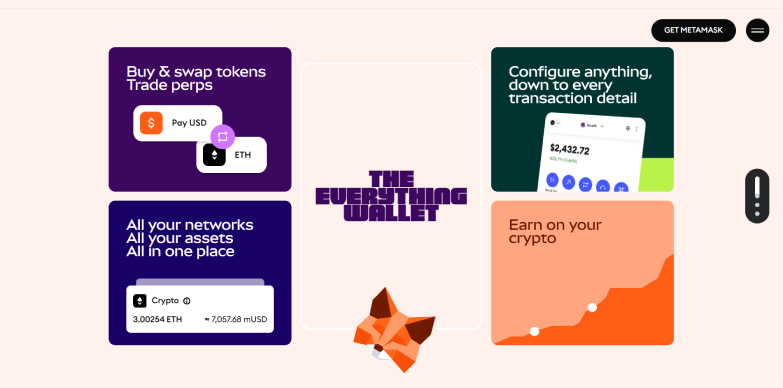
MetaMask Wallet Customer Support
While exploring the wallet platform during our review, we figured that MetaMask provides three main types of customer support:
- Help Center and documentation: This is their knowledge base which has information to most of the information related to common problems that users may encounter on the platform, along with other various FAQs.
- Community forums: The community forum is a moderated platform where users can browse past topics and post new topics to discuss amongst all the users.
- Ticket-based support system: Users can raise their issues to the support team via the support centre on the home page. Issues reported here can also be escalated to the technical support team via email, should customer support not be able to resolve it.
It’s always recommended that users rely on the provided support channels to solve their issues to prevent compromising their account details and falling prey to scams.
What Are the Security Measures On the MetaMask Wallet?
Private Key Ownership
- Users retain full control of their private keys
- No centralized storage or recovery
Seed Phrase Recovery
- A Secret Recovery Phrase enables wallet restoration
- Must be securely stored offline
Phishing & Social Engineering
The primary risk associated with MetaMask is not system-level hacking but phishing and social engineering attacks. Common attack scenarios include:- Fake websites requesting recovery phrases
- Malicious browser extensions
- Impersonation of support representatives
Best Practices
- Never share recovery phrases
- Use only official websites and apps
- Avoid suspicious links and pop-ups
- Use hardware wallets for large holdings
MetaMask Wallet Alternatives: Who Should Use and Who Should Avoid
Who Should Use
- Beginners entering crypto
- DeFi users
- NFT collectors
- Users needing seamless multi-chain access
Who Should Avoid
- Users requiring custodial account recovery
- Users storing large funds without hardware wallet protection
Our Methodology
To provide an objective and transparent review, we subject every wallet to a rigorous testing phase as follows:
- Technical Performance & Usability: We assess transaction fee estimation accuracy and performance during periods of high network congestion. Using testnet integrations, we simulate complex smart contract interactions to ensure the interface remains stable before users commit real capital.
- Security & Architectural Integrity: We audit private key management protocols, encryption standards, and hardware wallet compatibility (e.g., Ledger, Trezor). Our team scrutinizes open-source repositories and third-party security audits. We explicitly flag any “untraceable” privacy claims that lack transparent, public-facing documentation.
- The Self-Custody Experience: We evaluate the critical path of ownership, focusing on the intuitiveness of seed phrase setup and the recovery process. We also test the responsiveness of technical support for common issues, such as stuck transactions or dApp integration errors.
For a detailed breakdown of our scoring system and evaluation criteria, you can read our fullReview Methodology.
Our Final Verdict
MetaMask is one of the most widely used and accessible wallets in the Web3 ecosystem. Its multi-chain support, ease of use, and deep integration with decentralized applications make it suitable for both beginners and experienced users.
However, as a self-custodial hot wallet, it requires careful handling of private keys and recovery phrases. Additionally, it’s always important to use MetaMask for daily activities rather than using it as a storage space for cryptocurrency. It’s recommended that users use this platform in tandem with a hardware wallet for optimal utility and security.
Frequently Asked Questions
What type of wallet is MetaMask?
What type of wallet is MetaMask?
MetaMask is a self-custodial, multi-chain software wallet.
Is MetaMask safe?
Is MetaMask safe?
Yes, provided users follow proper security practices and protect their recovery phrase.
Can MetaMask store Bitcoin?
Can MetaMask store Bitcoin?
Yes, MetaMask supports Bitcoin along with multiple other blockchain networks.
Is MetaMask anonymous?
Is MetaMask anonymous?
No, it is not fully anonymous.
Can MetaMask be hacked?
Can MetaMask be hacked?
Direct system hacks are rare; most risks arise from phishing and user error.
Should I store crypto in MetaMask?
Should I store crypto in MetaMask?
It is suitable for everyday use and moderate holdings; hardware wallets are recommended for larger amounts.
See less