




Key Highlights:
- The HKMA rolled out new initiatives in four areas as part of its Fintech 2030 plan, focusing on agentic AI, post-quantum cryptography, tokenization, and cross-border payments.
- The SAGE project, just launched, aims to help financial institutions try out agentic AI and set up the right governance for how it’s used.
- The HKMA and HKUST teamed up to introduce a Post-Quantum Cryptography (PQC) Toolkit, helping banks get prepared for security challenges from future quantum computers.
- The Ensemble project is working toward 24/7 settlement of tokenized deposits. Also, a planned FPS-UnionPay link is expected to boost payment options in over 40 overseas markets.
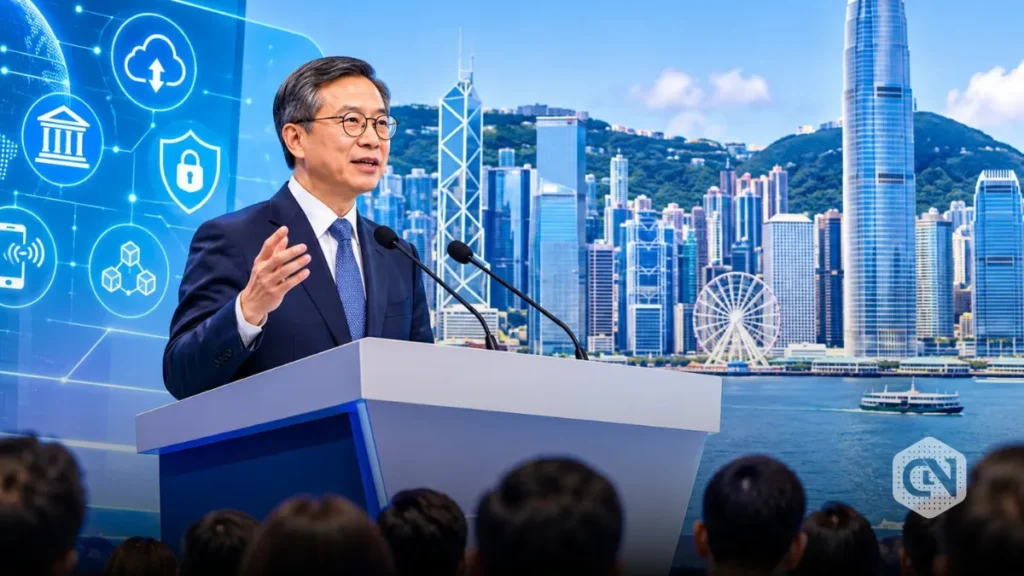
Hong Kong is stepping up its efforts to stay at the forefront of global financial technology. At Hong Kong Fintech Week 2026, held on November 2, the Hong Kong Monetary Authority (HKMA) announced a batch of new initiatives. The event, co-hosted by the HKMA and InvestHK, has now run for eleven years and draws participants from all around the world. They come together to talk about fintech trends, showcase new products, and make business connections.
These new announcements build on progress made through the HKMA’s Fintech 2030 strategy, first launched last year. Using the DART framework, which covers Data and Payment, Artificial Intelligence (AI), Resilience, and Tokenization, the HKMA wants to help financial firms tap into emerging technology while staying secure and responsible. This year’s steps target different parts of the financial sector, from how banks use AI, to the way digital assets are settled, and how people make payments across borders.
Bringing Agentic AI Into Financial Services With Stronger Governance
The HKMA is focusing on the rise of agentic AI in banking and finance. As AI improves, it’s starting to do more on its own, handling tasks and supporting processes more independently. This evolution could reshape how banks serve their customers and how people use financial services.
To guide this, the HKMA started the SAGE project, short for Searching Agentic Finance with Governance and Enablement. The goal is to give financial firms a place to test out agentic AI, while also setting up the right governance around it. The HKMA put together a team of experts from different sectors to support the project’s work and share their knowledge.
They also published a paper for discussion about using agentic AI in banks. The HKMA wants feedback from the industry about possible regulations. This approach lets banks explore what’s possible with new tech, while giving regulators insight into the risks and needs that might arise as this technology spreads.
Preparing Banks for the Post-Quantum Security Challenge
Cybersecurity is a big focus in the HKMA’s new plans. The rise of quantum computing could threaten today’s encryption methods, which protect both customers and their transactions. If those systems become vulnerable, banks will need to upgrade their defenses fast.
To help get prepared, the HKMA teamed up with the Hong Kong University of Science and Technology (HKUST) to roll out the Post-Quantum Cryptography (PQC) Toolkit, built with input from industry experts. The toolkit offers banks a clear path and practical tools to help them shift to post-quantum cryptography.
This should make the process more organized, helping banks check their systems and get ready for any changes they’ll need to make. The toolkit isn’t fixed either, it’ll be improved as banks use it and as PQC standards develop. That way, the industry can keep up as the technology and requirements change.
HKMA Advances Tokenization With 24/7 Settlement Capabilities
The HKMA is also taking tokenization further with the Ensemble project. This initiative is pushing for real-value transactions using tokenized deposits, available 24/7. That means banks and their clients will have more freedom to run financial activities, no matter the time.
These new features could open up options like better global fund management, smarter handling of tokenized asset portfolios, and more efficient treasury operations. This could help banks use their resources more wisely and bring new ideas for managing digital assets to life.
Another part of the Ensemble project was the completion of a pilot in the secondary market, where authorized dealers traded tokenized FX Fund Bills. This test aims to make secondary market and repo transactions more efficient. The HKMA plans to expand the project to include regulated stablecoins, widening the scope for tokenization.
Separately, the HKMA joined forces with Cyberport to launch the tConnect Launchpad. This new platform brings together banks, tech firms, and digital asset innovators. Their goal is to explore new applications and run pilot tests, moving tokenization from ideas to real-world use across Hong Kong’s financial sector.
FPS-UnionPay Link to Expand Cross-Border Payment Access
While AI, cybersecurity, and digital assets are moving forward, the HKMA also wants to make everyday payments simpler and more connected. The Faster Payment System (FPS) is set to link up with UnionPay International by the end of 2026.
Once connected, the system will support UnionPay and its partners, covering over 100 million merchants in Hong Kong, mainland China, and more than 40 other markets. People can pay by scanning QR codes, making shopping easier in Hong Kong and abroad.
This link is a big step toward making cross-border payments smoother by tying into existing networks. By hooking FPS up with UnionPay’s massive merchant base, it’ll be simpler for people to pay in different places.
At the event, HKMA Chief Executive Eddie Yue talked about how Hong Kong is well placed to seize the opportunities brought by fintech. He pointed to the momentum of Fintech 2030 and how banks and fintechs are getting better at using data, AI, tokenization, and emerging tech. He also stressed the HKMA’s aim to balance innovation with security, and to create a supportive space for Hong Kong’s fintech scene to grow sustainably.
