




Under U.S. President Donald Trump’s pro-crypto administration, the crypto sector has gained an impressive regulatory clarity as the administration is working on various regulatory frameworks at once to bring clarity for the digital asset sector. Last month, the United States Department of the Treasury Financial Crimes Enforcement Network (FinCEN) and the Office of Foreign Assets Control (OFAC) announced that they are proposing a joint rule. The main purpose of this joint statement is to implement the Guiding and Establishing National Innovation for U.S. Stablecoins Act, which is widely known as the GENIUS Act.
This is the first federal law created by U.S. President Donald Trump in 2025, which mainly focuses on payment stablecoins in the U.S. Stablecoins are digital tokens that are linked to the underlying assets like USD in a 1:1 ratio. These digital tokens are rapidly becoming popular in the digital payment industry as they are pretty cost-efficient in comparison to traditional payment modes. The GENIUS Act and other new regulatory frameworks are providing a new and clear guideline for these stablecoins to ensure the safety of funds while their sustainable growth in the country to make America a crypto capital.
GENIUS Act Explained: Key Things to Know
On July 18, 2025, U.S. President Donald Trump officially signed the GENIUS Act into a law. With this law, it became clear as to who can issue payment stablecoins in the United States. These stablecoins have been designed to make payments and settlements, allowing holders to redeem them at a fixed value while being backed by underlying assets such as the U.S. dollar.
The main purpose of the GENIUS Act is to ensure the safety of consumers and the entire digital asset ecosystem. By implementing these rules, the U.S. government also wants to crack down on illegal activities like money laundering. This act will also help the country to retain the dominance of the USD with the backing of the USD or Treasury-backed reserves.
According to the official document, this law will only allow some permitted payment stablecoin issuers (PPSIs) to issue payment stablecoins. This law makes it mandatory for these issuers to maintain 1:1 reserves backed by cash along with short-term Treasuries. For the same, the law also comes with a redemption right.
Scott Bessent, Secretary of the Treasury, stated in the press release, “President Trump is strengthening American leadership in digital financial technology. This proposal will protect the U.S. financial system from national security threats without hindering American companies’ ability to forge ahead in the payment stablecoin ecosystem.”
The GENIUS Act is expected to end the uncertainty in the stablecoin market and remove bad stablecoins from the U.S. market by making audits mandatory.
The New Proposed Rule Focuses On Anti-Money Laundering and Sanctions
The latest rule proposed by FinCEN and OFAC in April mainly focuses on risks linked to illicit finance. This new rule is treating payment stablecoin issuers (PPSIs) as financial institutions based on the Bank Secrecy Act, which is also known as BSA. This category is directly enforcing payment stablecoins to comply with anti-money laundering (AML) and countering the financing of terrorism (CFT) rules. These new rules also make it mandatory to maintain sanctions compliance programs according to FinCEN.
These new requirements are created to match the size and complexity of each stablecoin issuer. The idea behind the implementation of new rules is to reduce burdens on smaller issuers while protecting national security.
1. AML and CFT Requirements for Stablecoin Issuers
The new proposed rules are making it mandatory for companies to assess and document the details related to their operations and customers. Stablecoin issuers will also have to create clear internal rules to monitor stablecoin transactions. They will also have to appoint a qualified AML officer located in the U.S. to ensure compliance.
Apart from this, stablecoin issuers will have to file Suspicious Activity Reports (SARs) to flag unauthorized transactions.
2. Sanctions Compliance Program
The new proposal is also implementing the new requirement for a formal sanctions compliance program. According to the official document, the sanctions compliance program will make it mandatory for PPSIs to complete their senior management commitment and provide much-needed resources to comply with laws.
Apart from this, under the new compliance program, they will have to carry out regular risk assessments in order to ensure the funds’ safety. These entities, known as PPSIs, will also have to ensure strong internal controls by creating better policies. They will also have to integrate new technology to track and block unauthorized transactions.
PPSIs are already committed to following the general OFAC sanctions. But the new proposed rules will create a better program through new requirements. This will help regulators to implement new rules for better recordkeeping, reporting, and sharing information.
Impact of New Rules in the GENIUS Act on Real-World
The stablecoin market is growing at a very fast pace and currently holds a cumulative market capitalization of around $323.35 billion, according to CoinMarketCap. In just one year, its market capitalization shot up by around 30%.
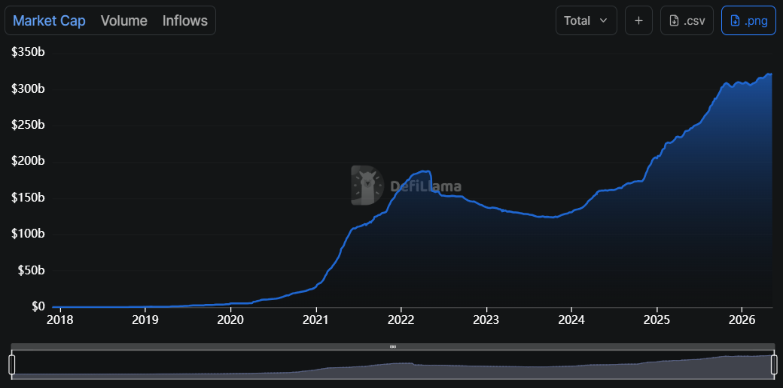
(Source: DeFiLlama)
The regulatory frameworks and guidelines are helping the crypto industry in reducing the uncertainty in the stablecoin market, which was one of the major obstacles in the path of its expansion. Compliant-friendly stablecoins in the U.S. can integrate into the traditional financial markets easily. This is why many major financial institutions, like PayPal, are rolling out their own stablecoins.
Rules like the GENIUS Act are expected to boost the adoption of stablecoin, which is expected to surpass adjusted stablecoin volume of around $719 trillion by 2035, according to the Chainalysis report.
By bringing strict laws of AML, the government can reduce the use of stablecoins in illegal activities. The new framework will bring stablecoin issuers under the surveillance of the Bank Secrecy Act and OFAC, which will allow regulators to keep track of the stablecoin payments and avoid illegal activity.
The U.S. is also using these regulatory frameworks to retain its dominance in the global financial world through USD-pegged stablecoins, such as USDT, USDC, etc. According to DeFiLIama, USD-based tokens are already dominating around 99% of the entire stablecoin market. By keeping this tight grip on the stablecoin market with a clear regulatory framework like the GENIUS Act, the U.S. wants to maintain its dominance in the digital asset world.
Also, the GENIUS Act is making it mandatory for issuers that reserves must be held in USD or Treasury securities. This will increase the demand for American assets among stablecoin issuers.
Summing Up
The proposal will play a major role in the implementation of the GENIUS Act in the real world. While there are new regulatory frameworks like the CLARITY Act getting delayed due to issues like stablecoin yields, the GENIUS Act is creating a safe environment for the digital asset industry. The public comment period is open until around June 9.
In other words, the United States is creating clear guidelines for stablecoins to ensure the safety of consumers and stakeholders.
Also Read: Why RWAs Are Becoming the Backbone of Crypto’s Next Growth Phase

 GoogleNews