




Key Highlights
- Tokenized IP rights are becoming a hot topic of discussion, as they can change how the world claims ownership
- Unlike traditional IP, tokenized intellectual property leverages distributed ledger technology for immutable records and programmable rules.
- However, this sector is also waiting for clear regulatory guidelines
While the adoption of blockchain technology is gradually growing with real-world applications, the concept of tokenized intellectual property (IP) has lately gained the attention of many people.
This innovation in blockchain technology is expected to transform the landscape of intellectual property, which includes creations like patents, copyrights, trademarks, and trade secrets. Intellectual property has long been an important factor in global economies.
However, these IPs are mostly illiquid and often get stuck in bureaucratic processes. These kinds of limitations decrease its accessibility and monetization.
But here is where Tokenization can help to resolve such issues by converting IP rights into digital tokens. These digital tokens can also be traded, fractionalized, and managed efficiently. This concept not only changes how the world claims ownership, but it also opens doors for new avenues for creators, investors, and businesses.
What is Tokenized IP & How Can Intellectual Property Be Tokenized?
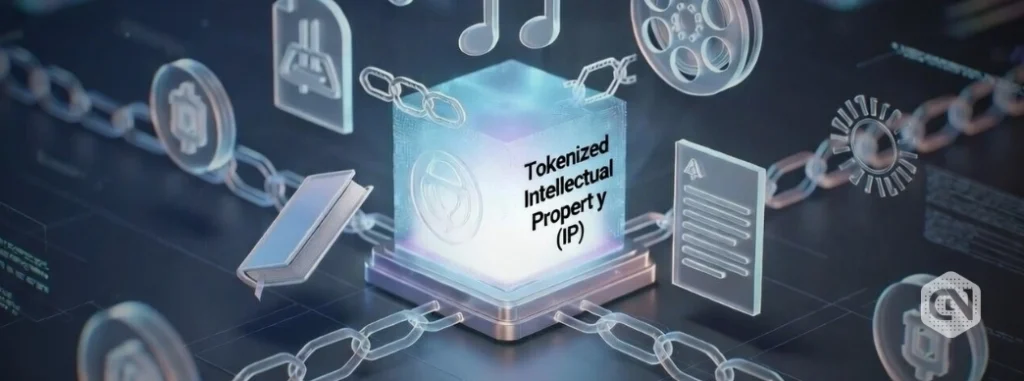
Tokenized intellectual property is commonly referred to as the digital conversion of IP rights as blockchain-based tokens. These tokens cover all aspects of IP rights, including ownership, licensing, or revenue-sharing claims linked to assets like inventions, artistic works, or brand identities.
(Source: SoluLab)
Unlike traditional IP, which depends on centralized registries and a long legal process, tokenized intellectual property uses distributed ledger technology for immutable records and programmable rules.
The tokenization of IP makes it more dynamic, which allows it to function like tradable securities.
One can tokenize IPs in various forms. For example, a patent might be divided into tokens, which can represent fractional ownership of future licensing fees. Similarly, a copyright for a song could yield tokens linked to royalty streams.
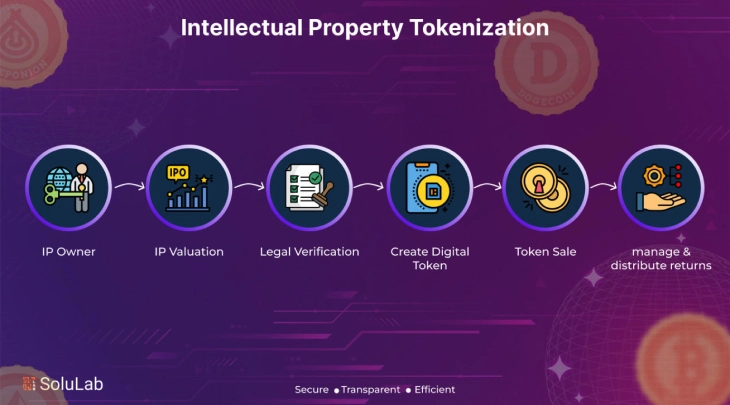
The process of converting IP rights into tokens starts with identifying the IP’s value by checking its market potential, revenue history, and legal status. After that, creators or owners can choose the blockchain network of their choice. This includes Ethereum or Polygon, which supports standards like ERC-721 for unique assets or ERC-1155 for semi-fungible ones.
In the next step, creators need to write code for smart contracts to define terms, such as automatic royalty distributions or usage restrictions. Once tokenized, their assets become more accessible on decentralized exchanges. This can open it for global participation without intermediaries.
This method is a perfect fit for diverse IP types, such as catalogs for royalties, pharmaceutical patents for research funding, or even trademarks for brand equity sharing. However, tokenization needs clear legal backing to ensure tokens align with real-world rights. This kind of precautions helps you to avoid future disputes.
Popular Projects of Tokenized Intellectual Property (IP)
There are many projects comes with illustrated tokenized intellectual property.
Story Protocol is one of the popular projects, which tokenizes IP for AI-based applications. It allows creators to program ownership, remixing, and monetization rules. It also addresses AI’s data needs by making IP programmable, with tokens facilitating licensing and revenue sharing in creative industries.
IPwe has also gained popularity in the patent tokenization sector, which creates a marketplace where patents are converted into NFTs or fractional tokens. Partnering with IBM, it allows companies to trade, license, or finance patents efficiently. This allows its client companies to transform dormant IP into liquid assets.
Apart from this, there is a project called Royal, which focuses on music IP rights and allows artists to tokenize royalties. On this platform, fans buy tokens representing shares in song earnings, which helps them to boost creator-fan economies.
Similarly, Molecule targets the biotech industry, using IP-NFTs to fund research by tokenizing intellectual property rights and data. This platform connects scientists with investors through decentralized marketplaces.
Pros and Cons of Tokenization of IP Assets
There are numerous benefits of tokenization. It enhances liquidity, turning illiquid IP into tradable assets, potentially increasing valuations through real-time market dynamics. Fractional ownership lowers barriers, allowing diverse investors to fund innovations, while global access expands markets beyond borders.
Apart from this, transparency via blockchain reduces fraud, and smart contracts automate royalties. This helps creators to cut administrative costs.
However, there are also some disadvantages of tokenized IP rights. For example, regulatory uncertainty is one of the biggest challenges, as a token may fall under securities laws, complicating compliance across jurisdictions. There are some security risks, including hacks or smart contract vulnerabilities, that threaten asset integrity.
Also, it takes too mush costs for legal and technical setup, which can deter smaller creators. The digital asset sector is highly volatile, and it can undermine token values. Apart from this, enforcing tokenized rights in non-digital courts remains untested, which can cause legal disputes.
Summing Up
Tokenized IP is a new era for asset management, which blends blockchain technology’s power with IP’s intrinsic value. While this sector is still in its early stages and is gradually growing, one cannot deny that it has incredible economic potential.
Also Read: Beyond Cryptocurrency: Real-World Applications of Blockchain Technology

 GoogleNews