




Key Highlights:
- In the beginning, CeFi ruled the crypto yield.
- After 2022, DeFi came out to be the best alternative that could bring transparency and self-custody on to the table.
- Consumer DeFi is on the rise because of the yield apps.
The entire blockchain industry was under spotlight back in 2009 when Bitcoin made its debut. During this launch, there was no centralized finance (CeFi) or decentralized finance (DeFi). Bitcoin was purely peer-to-peer money. With this innovation, users could easily send money from one person to the other without involving banks, exchanges or intermediaries. During this time, there was no concept of yield products, lending platforms, or trading apps, it was all about wallets and transactions only.
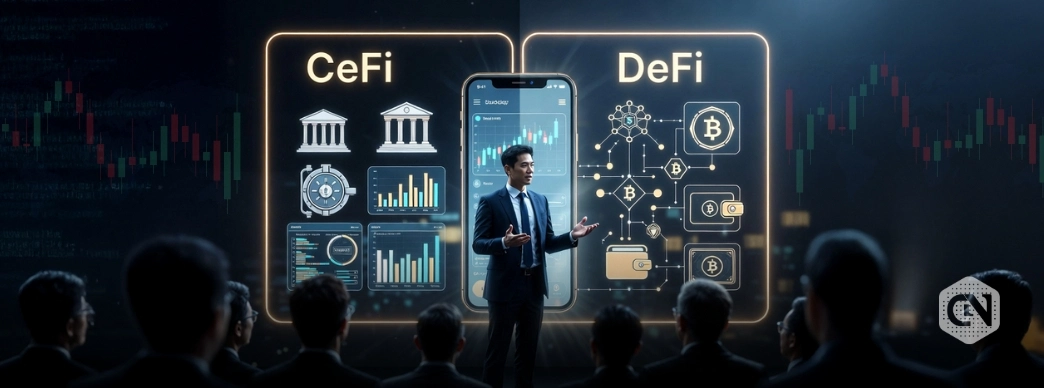
From CeFi to DeFi
As the adoption of the crypto industry grew, CeFi came into picture and centralized exchanges were established so that buying, selling and trading became easy for crypto users. CeFi was easy for users to use and familiar because the sign up was familiar, depositing funds was easy and users could earn returns which were very predictable. Most of the yield was not on-chain but was off-chain and it was all handled by the platform.
The trust within these platforms began to break when some big names within the CeFi industry like FTX collapsed or froze withdrawals. These platforms that seemed to be low-risky relied on hidden balance sheets, assets that were borrowed and unseen leverage. When the market dipped, the users were not able to access their funds. The main question that arose here was about the control over money.
This ideology then reshaped the user behaviour. People started shifting their perspective. They started looking for convenience, users then talked about the importance of self-custody, transparency, and on-chain verification. The only viable option was DeFi protocols, even though it is way more complex than CeFi but offered something that CeFi could not and it was the public smart contracts, visible reserves, and the ability to exit at any time without needing anybody’s permission.
After this shift, CeFi did not just disappear into the thin air but the roles changed. From being the primary source of yield, it became a gateway that was being used for fiat access compliance and liquidity. The actual yield generation shifted on-chain, setting the stage for the rise of consumer-focused DeFi and yield apps.
As more and more users jumped to DeFi, the impact was calculated using Total Value Locked (TVL). TVL is a metric which indicates the growth of the DeFi Sector.
What is TVL?
Total Value Locked or TVL is a metric that indicates the total amount of crypto assets users are willing to lock on-chain in DeFi protocols, like a measure of “capital confidence” in the space. If TVL goes up, it indicates that more and more users are committing funds to smart contracts rather than letting them sit idle on centralized exchanges or wallets.
Before 2020, CeFi was dominating the space and DeFi just existed as a concept and the adoption was bare minimum. The TVL at this time was just a few dollars.
In 2020, the first major shift from CeFi to DeFi was seen during the summer and this period is known as the DeFi Summer, because Ethereum-based protocols like Compound, Aave, and Uniswap introduced concepts such as yield farming, liquidity pools and on-chain lending. This TVL then went from $1-2 billion in 2019 to $15-20 billion.
The real shift was experienced after the FTX collapse and freezes at platforms such as Celsius and Voyager. Users lost their trust in centralised yield and moved to transparent smart contracts. From 2023-2025, there were many consumer friendly yield apps, and improved UX which further decreased the barrier of entry for users.
By the end of July 2025, the DeFi adoption spread like crazy and hit an all-time high of $270 billion. This indicated diversified strategies such as liquid staking, restaking, RWAs and structured yield products. This shows that the on-chain protocols have captured a significant amount of attention and capital from the crypto market.
Consumer DeFi: Making On-Chain Yield Simple
As we can see the path to this moment was not easy for the DeFi industry. Even for DeFi to survive, changes have to be executed continuously. DeFi started out as complex, protocol first platforms but today they have shifted to user-first experiences.
Modern DeFi apps make sure that they provide simple user interfaces, app-like UX and one-click yield, hiding gas fees, bridges, and risks from the users. Yield apps have become the new on-ramp, which offer passive income without the need of trading actively. This combines strategies such as liquid staking, automated lending and delta-neutral and vault-based yield that can outperform CeFi savings products.
With inflation pressures, falling real returns in TradFi, and waning trust in CeFi, these apps feel familiar, easy to use and reliable, and hence it has been able achieve great adoption and is being highly used everyday by the users.
Risks, Realism and What Comes Next
Even though the adoption of DeFi has increased over the years, there are significant risks also associated with it. The recent Balancer exploit and several other exploits are prime examples that highlight vulnerabilities in smart contracts. There are many cases, where losses stemmed from a code that was flawed or compromised, or the access control had issues and not from the DeFi model itself.
However, the best part is that these risks are visible on-chain and hence users can assess, audit and react more transparently to these situations, which is practically not possible in CeFi.
Looking ahead, there is a possibility that yield apps could become the default interface for DeFi as it would get rid of all the complexity for the users. CeFi players are making their shift to DeFi and consumer DeFi is now beginning to compete with neobanks on yield and accessibility.
As regulations around centralized platforms gets more stringent, it might push people towards DeFi and could increase adoption of crypto.
Final Thoughts
The move from CeFi to consumer DeFi indicates that the users are chasing transparency, self-custody and on-chain yield, something that CeFi could not provide. The rising TVL is a clear sign of growing confidence and yield apps are making DeFi usable for everyday users. The next phase of crypto will not be about complexity but it will be about simple, trusted access to on-chain finance.
Also Read: DeFi 2.0: How Decentralized Finance Is Reinventing Itself for Stability
See less

