





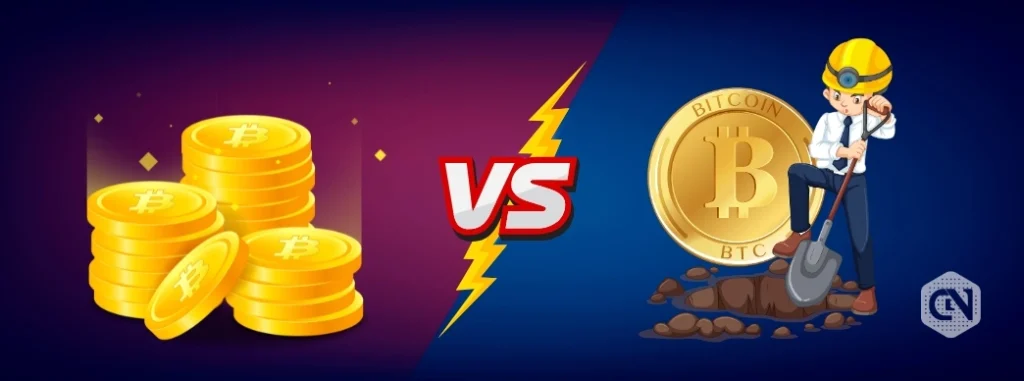
Crypto is the new side hustle on the block, and it has got everyone talking about it. From late-night scrolls to deep dives on Discord, people are cashing in. When it comes to earning in crypto, there are two main mechanisms that run the entire show, and they are mining and staking mechanisms.
Both of these mechanisms make sure that the wheel keeps turning and that the network is secure. The users, on the other hand, get rewarded for their hard work. But the catch here is that both of them work in completely different ways. With how fast the industry is growing, it is super important for investors, developers, and even curious beginners to understand how both of these systems work and operate.
Understanding the Basics
Cryptocurrencies, most of them, are functional on decentralized networks. The transactions that are carried out on such networks are usually verified, validated, and then added to the blockchain. The security of the network is maintained through consensus protocols. Two broadly applied consensus methods are Proof of Work (PoW) and Proof of Stake (PoS).
PoW systems rely on mining. It requires substantial computation to solve some challenging mathematical problems. The first miner to solve the problem gets to authenticate a block of transactions and earn some bitcoin. A network such as Bitcoin uses this method.
By contrast, staking is core to PoS networks. Rather than relying on computational power, it relies on validators to lock up a certain amount of cryptocurrency as collateral. Validators are selected to verify transactions by the size of the stake they hold and other considerations, and they are paid for their role.
The Mechanics of Crypto Mining
Crypto mining is a specially-built data processing computers are used to do the math that verifies blockchain transactions. It’s a cutthroat world in which miners compete against one another to solve complex cryptographic puzzles. The solution is thrown out to the entire network, and the miner that solves this problem first references the block from the blockchain and gets a reward.
Mining has come a long way from home PC to gigantic mining farms with ASICs (Application-Specific Integrated Circuits). They are also powerful, costly, and energy-intensive. Take Bitcoin, for example, you can’t just fire up your laptop and start mining. You need to have all the gears that are needed and, importantly, high electricity as well.
For example, if you want to mine Bitcoin, it is not possible without having special hardware and cheap power, as it demands huge amounts of computational power.
One of the downsides of mining is that it uses a great amount of energy. Bitcoin mining, for example, uses as much electricity in a year as some small countries. Some areas have banned or regulated mining due to environmental concerns and increased costs. Nevertheless, mining is a fundamental part of PoW networks, which are kept secure by means of being robustly decentralized.
If you want to explore how mining is evolving beyond traditional PoW models, check our detailed guide on the future of crypto mining for deeper insights.
The Process of Crypto Staking
Staking, on the other hand, locks your crypto inside a PoS network. This locking of crypto is responsible for the network’s operations and security. The users, in return, received staking rewards and are often paid out in relation to the amount of crypto that is staked.
It is not like mining, where you need expensive hardware and lots of power. It is often as straightforward as having some tokens in a wallet and delegating them to a validator. Some blockchains make users operate validator nodes, requiring technical expertise and a minimum level of tokens to be held. In its current iteration, for instance, Ethereum demands 32 ETH to operate a validator node.
Staking is considered to be more energy-efficient and accessible than mining. It promotes long-term retention, decreases selling pressure on an asset, and offers predictable returns. Staking is beneficial, but there are risks involved, too. These risks include slashing (tokens are taken away for being malicious or offline), lock-up period, and volatility of the price.
There are two sides to a coin; as staking is beneficial, there are risks involved, too. Risks such as slashing(staking tokens taken away for being malicious or offline), lock-up periods, and price volatility.
Crypto Staking vs. Mining: Quick Snapshot
| Factor | Staking (PoS) | Mining (PoW) |
| Setup | Just lock tokens — no hardware needed | Requires costly hardware & electricity |
| Energy Use | Very low/eco-friendly | Very high |
| Difficulty | Beginner-friendly | Technical & competitive |
| Rewards | Predictable staking yield | Block rewards (fluctuate) |
| Risks | Slashing, lock-ups, volatility | Hardware costs, market swings |
| Best For | Long-term holders seeking passive income | Tech-savvy users with capital |
Profitability and Cost Considerations
Mining is a good option if you are looking to make a good profit. But before you start making a profit, you need a hefty investment to set up the entire computer, electricity, and hardware. After the setup is complete, maintenance is also a task. Operational expenses such as electricity, cooling, and hardware upgrades are constant struggles. Furthermore, in some networks, there is a periodic halving of rewards (such as Bitcoin), making it less profitable over time.
Staking, on the other hand, requires less of a hurdle to get going. Users may also stake using the centralized exchange or decentralized staking pool, in small quantities. Yield varies network-to-network and takes into consideration total supply stakes, network-level inflation, and validator performance.
Although mining yields better returns when markets are bullish, staking provides higher stability and less potential risk. In the end, choosing between staking and mining depends on the availability of capital, technical know-how, and also on the long-term investment strategy.
Security and Network Integrity
PoW systems such as Bitcoin have been incredibly secure. Attacks such as double-spending are economically infeasible given the need for enormous computational resources. Decentralization is further achieved via mining, but mining power from pooling entities has the potential to be a centralizing force on the network.
PoS networks are based on using economic incentives to protect security. Bad validators can get slashed for their staked tokens. Although PoS systems have the potential to be more scalable and energy-friendly, they come with having power concentrated in the hands of the wealthy, who have more tokens and therefore more decision-making power in consensus.
Hybrid models and other innovations, such as delegated proof of stake (DPoS) or proof of history (PoH), are experimenting with reconciling decentralization, efficiency, and security.
Regulatory Landscape
The mining activity has caught the eyes of regulators. This is mainly due to the energy consumption of the entire process. Some of the regulators have banned the mining process itself, whereas others have tried to impose tax and licensing regimes. These laws are ambiguous and could impact miners’ profitability.
Staking, as it requires fewer resources, has been faced with fewer regulatory challenges overall. But it’s not free of legal challenges. Several regulators are considering whether income that comes from staking should be considered a security. This may impact the way users report taxes or engage in staking services.
Now, exchanges that are offering staking-as-a-service, specifically, are finding themselves asked or told they must register or comply with securities laws in at least one country. As regulation gets more mature, requirements for compliance for both mining and staking may also change.
Choosing Between Crypto Staking and Mining
Decisions between staking and mining will be based on various factors:
- Technical Skill: Mining involves setting up, maintaining, and fixing hardware. Staking also had a lower technical barrier, in general.
- Capital: Mining requires a large amount of upfront investment in hardware and energy. Small amounts can start staking, especially through pools.
- Risk and Tolerance: Hardware risk, electricity, and market volatility associated with mining. Staking has risks, such as slashing and token depreciation, but it is less volatile.
- Eco Factor: Staking could have an edge in terms of carbon guilt for eco-aware users.
- Time Horizon: Investors with long-term outlooks searching for reliable passive income could prefer staking. Mining is probably more beneficial to active investors who have the technical know-how.
The Future Outlook
Ethereum’s shift to PoS consensus shows that the crypto world is starting to change. New blockchain initiatives have favored PoS for its scalability, energy-saving, and wider availability. Liquid staking, which allows users to stake their assets while still being able to sell at any time, is also becoming popular.
On the other hand, Bitcoin is still fully committed to PoW, with a battle-tested mining network. As a store of value and decentralization, it’s not surprising that it will continue with mining.
Furthermore, hybrid consensus mechanisms are also under research that make use of these two consensus mechanisms. These could potentially strike a balance between energy, security, and decentralization. Staking and mining both play an important role in the crypto ecosystem, and it all depends on the infrastructure that is available, existing regulatory guidelines, and the technology available.
Final Thoughts
Both mechanisms play their roles in the blockchain ecosystem. They are responsible for providing security, decentralization. They are also the economic reasons due to which the ecosystem is up and running. With the help of PoW, mining has set the stage for decentralized finance, but PoS is something that will take the ecosystem forward.
PoS has gained attraction because it does not need a huge setup investment, nor does it need a great amount of energy to function, and it is fairly easier to stake than mine cryptocurrencies.
With this article, one can easily differentiate between staking and mining and their benefits and disadvantages. Depending on your own goals, purpose, the amount of money you can and want to invest, you can choose between mining and staking and earn a passive income.

 GoogleNews