

Key Highlights
- SEC and CFTC have signed a Memorandum of Understanding (MOU) to collaborate on the regulation of digital assets
- By signing the MOU, these agencies are expected to end years of jurisdictional conflicts between the agencies
- Under Trump’s pro-crypto administration, the crypto sector has witnessed impressive progress in regulatory developments for crypto
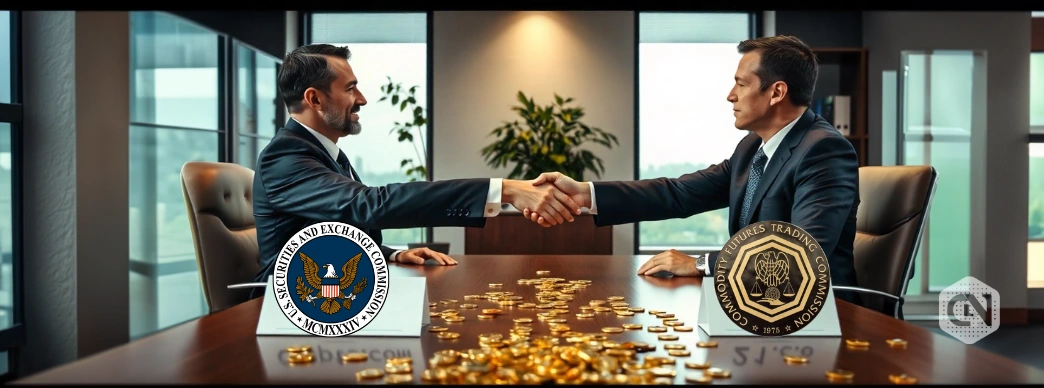
On March 11, the U.S. Securities and Exchange Commission (SEC) and Commodity Futures Trading Commission (CFTC) signed a Memorandum of Understanding (MOU) to coordinate oversight of the crypto sector.
🚨 TODAY: Alongside the @CFTC, we entered into an updated Memorandum of Understanding to guide future coordination between our two agencies.
This MOU will support lawful innovation, uphold market integrity, and promote investor and customer protection.
Link in the comments. pic.twitter.com/tAJbYrukvs
— U.S. Securities and Exchange Commission (@SECGov) March 11, 2026
The MOU agreement is signed by SEC Chairman Paul S. Atkins and CFTC Chairman Michael S. Selig. It will create a joint agreement for rulemaking, data sharing, examinations, and enforcement for the crypto sector.
SEC and CFTC Aim to Bring Regulatory Clarity for Crypto
This MOU will address crypto’s major challenges by directing both agencies to provide “a fit-for-purpose regulatory framework for crypto assets and other emerging technologies.”
It will help both agencies to develop clear guidelines for crypto asset products for dually registered platforms. This will help these agencies to remove obstacles to lawful innovation while preserving market integrity.
This new Joint Harmonization Initiative will look over the implementation of new rules. This will help them to create product definitions and reduce duplication of reporting.
This MOU will end the years of jurisdictional tussle between the two agencies over regulating the crypto sector. Under former SEC Chair Gary Gensler, the SEC targeted securities authority over the vast majority of tokens through enforcement actions and the Howey test. This approach clashed with the CFTC’s view of Bitcoin and Ether as commodities.
SEC Chairman Paul S. Atkins stated in the press release, “For decades, regulatory turf wars, duplicative agency registrations, and different sets of regulations between the SEC and CFTC have stifled innovation and pushed market participants to other jurisdictions.”
He said, “This updated Memorandum of Understanding will serve as a roadmap for a new era of harmonization between the agencies – one that is critical to support U.S. leadership in this next chapter of financial innovation. By aligning regulatory definitions, coordinating oversight, and facilitating seamless, secure data sharing between agencies, we will ensure our rules and regulations deliver the clarity market participants deserve.”
Under the blurred picture of crypto regulations, the tussle between CFTC and SEC led to overlapping investigations, duplicative registrations for exchanges, and unclear guidelines. These fights between two agencies have forced crypto-based innovations to move outside the country. It also sparked a fear in DeFi protocols and token issuers.
However, the tables turned after the Presidential election in 2024. Under U.S. President Donald Trump’s pro-crypto administration, the crypto world has witnessed an impressive regulatory development. In January 2026, Atkins and Selig relaunched Project Crypto.
SEC has clarified that most secondary-market tokens and memecoins are not securities. It also provided much-needed guidelines on staking mining activities, along with stablecoin frameworks and tokenized collateral.
CFTC Chairman Michael S. Selig said, “America’s financial markets are the envy of the world because they scale and adapt to meet investor demands. Like our markets, the CFTC’s and SEC’s regulatory frameworks must also evolve and modernize to accommodate the needs of our market participants.”
He said, “This Memorandum of Understanding solidifies the agencies’ commitment to harmonize regulatory frameworks to provide comprehensive and seamless financial market oversight. By working together, we’ll eliminate duplicative, burdensome rules and close gaps in regulation for the benefit of all Americans and usher in a Golden Age of American finance.”
Apart from the crypto, the MOU is creating a guideline for other financial innovations also. By harmonizing oversight of hybrid products spanning securities and derivatives, the agencies reduce systemic risk transmission across markets and position American capital markets to capture the next wave of digital infrastructure.
Also Read: Binance Suing WSJ a “Terrible Decision”, Says Zero Knowledge Founder
