

Key Highlights
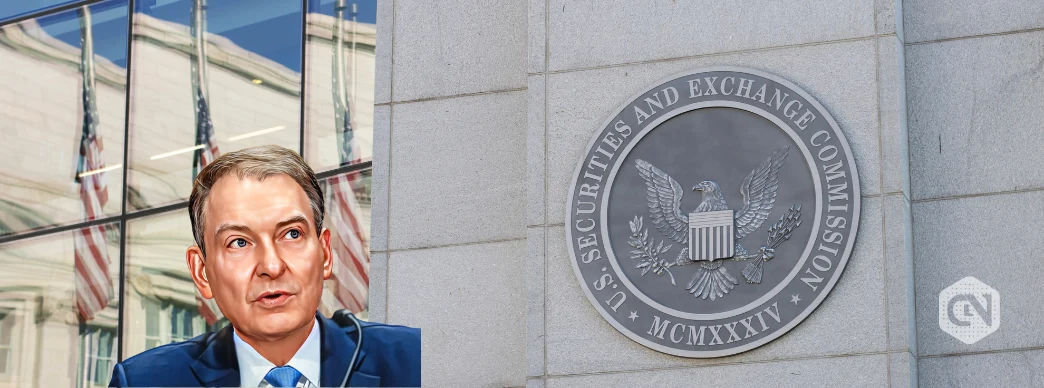
- In the latest post on X, SEC Chairman Paul Atkins revealed that he is going to give major speed tomorrow
- He is also going to ring the opening bell at the New York Stock Exchange
- Under Paul Atkins’s leadership, the SEC is continuously working in the direction of developing a regulatory framework for the cryptocurrency market
According to the latest post on X (formerly Twitter), the Securities and Exchange Commission (SEC)’s Chairman, Paul Atkins, has revealed that he is going to give a major speech on the enduring principles that have powered the world’s most dynamic economy for the first 250 years of America.
Tomorrow morning, I will be ringing the opening bell at @NYSE and delivering a major speech on the enduring principles that have powered the world’s most dynamic economy for the first 250 years of America.
Tune in at 10:00 a.m. ET to watch my speech: https://t.co/4TO9Yx10RF
— Paul Atkins (@SECPaulSAtkins) December 1, 2025
Standing on the famed NYSE podium, Chairman Atkins delivered an address titled “Revitalising America’s Markets at 250.”
SEC Changes Its Stance Under Paul Atkins’ Leadership
Under new leadership, Paul Atkins, the Securities and Exchange Commission (SEC) has adopted a new strategy, changing its previous hostile stance toward the cryptocurrency sector. For example, the agency has dropped many big, controversial legal battles against the cryptocurrency industry.
Atkins took charge in April 2025 and immediately launched a new initiative for the crypto sector called “Project Crypto.” The main goal behind this initiative is to provide clear rules for digital assets. He wants American companies to lead the global market instead of moving their operations abroad. In just a few months, this promise of clearer regulations has already had an impact.
This new approach is a direct reversal of the previous SEC’s stance. From 2021 to early 2025, the SEC was led by Gary Gensler. His team, as chairman, was defined by what many called “regulation by enforcement.” At that time, the agency filed more than 100 lawsuits against major crypto firms like Binance, Coinbase, and Ripple. Gary Gensler argued that most cryptocurrencies were unregistered securities.
These kinds of enforcement actions have created massive uncertainty for the entire industry.
SEC Develops Regulatory Framework for Crypto Sector
The full plan was revealed in July. Project Crypto is expected to integrate blockchain technology safety into the U.S.’s existing traditional financial market. Chairman Atkins has stated clearly that he believes most crypto assets are not securities.
“I believe that most crypto tokens traded today are not themselves securities. Of course, it is possible that a particular token might have been sold as part of an investment contract in a securities offering. That is not a radical statement; it is a straightforward application of the securities laws. The statutes defining securities list familiar instruments like stocks, notes, bonds, and then add a more open-ended category: the “investment contract,” Paul Atkins said.
“I described “Project Crypto” as our effort to match the energy of American innovators with a regulatory framework worthy of them. Today, I would like to outline the next step in that journey. At its core, this next step is about basic fairness and common sense as it relates to the application of the federal securities laws to crypto assets and related transactions,” Paul Atkins stated in an official statement.
Recently, the SEC has unveiled the development of a “token taxonomy.” This will provide a simple classification system to identify different types of digital assets. For example, Bitcoin and Ethereum would be classified as digital commodities, not securities. Traditional stocks or bonds that are issued on a blockchain would be regulated as normal securities.
However, the agency is also facing challenges. A coalition of global stock exchanges has fired a warning shot at the SEC. In a letter, they urged the Crypto Task Force to slow its roll toward granting regulatory exemptions to platforms offering tokenised U.S. stocks.
“While we are supportive of the principle of exemptive relief, we are concerned that the broad use of such relief presents risks to investors and market integrity. Well-meaning exemptive relief that dilutes the core protections the securities laws were designed to provide or distorts competition through granting selective advantages rather than fostering innovation within a level-playing field, will undoubtedly have negative – potentially acute – consequences for US markets,” stated in the letter.
